W
WftRight
Guest
A friend at work is going on a six week business trip, and I've agreed to take care of his leopard geckos while he's away. That's the good news. The bad news is that he believes one of his leopard geckos is dieing. To further complicate matters, I've never had a leopard gecko. I've had a crested gecko for about six months and snakes for about 18 months. I've read a bit about leos and their care on another forum.
I haven't seen this animal yet, but here's what I know from asking him about her.
First, I'm thinking of separating her from the other leo. If I keep them apart, I can know for certain whether she is defecating. Does anyone think her whole problem could be impaction from being on sand up until a few months ago? My friend says that her belly looks fine, so maybe the problem isn't impaction. Keeping her separate would also allow me to monitor whether she will eat when I'm not watching.
I'll probably buy a cheap plastic container like a RubberMaid or Sterilite. I'll set up the new cage on a thermostat and heat pad and control the basking temperature to about 90°F. I'll use paper towels as a substrate. I'll make some hides from cardboard boxes and other things that I can readily throw away. I'll do the old warm hide, cold hide, humid hide routine. I bought some of the T-Rex mix for leopard geckos, and I'm going to try feeding her that stuff. I'll give her a little dish of calcium and a little dish of water. If she must be hand-fed, the T-Rex mix should be easier than forcing open her mouth and giving her a pellet of something. I have some of that Four Paws Vita-Spray, and I may use a little of that on her.
What else should I try?
Again, I don't have her yet. I may be able to show pictures tomorrow night, but I'm just starting the thought processes tonight.
Thanks,
Bill
PS. Yes, I'm in over my head, but maybe he's making a simple mistake that can be corrected.
I haven't seen this animal yet, but here's what I know from asking him about her.
1. He's considered putting her down a couple of times, but he keeps putting it off. He's considered taking her to the vet, but he feels that the vet would just tell him that there's nothing that can be done.
2. He's had her for seven years and bought her as an adult. He really doesn't know how old she is.
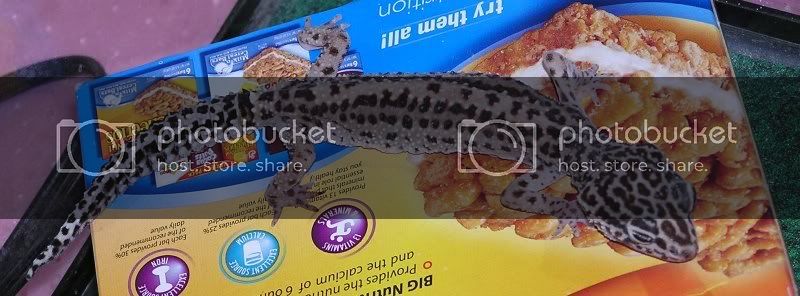
3. Both of her eyes are cloudy as if she has retained eye caps, but he's not aware of her having any other shedding issues.
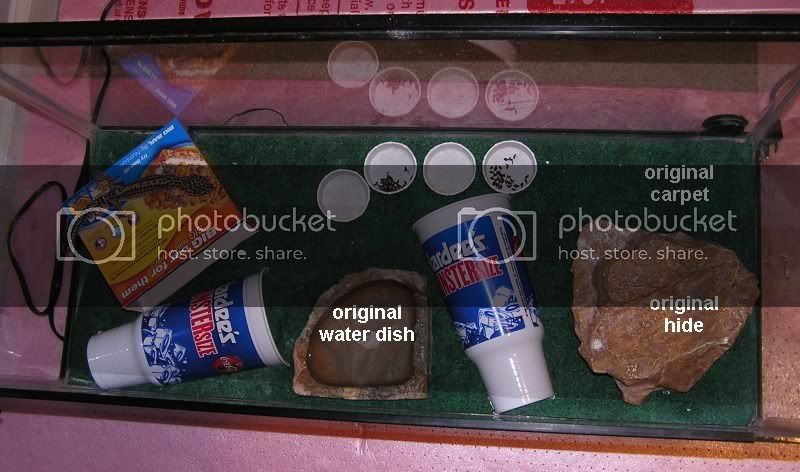
4. He has two leopards and the other one isn't having any health problems. He keeps them both in a 20 gallon long aquarium.
5. He uses both a UTH and a light bulb for supplemental heat. He wasn't specific about temperatures, but my impression is that they are in the right range.
6. He feeds them meal worms and crickets. He dusts the crickets with calcium.
7. This girl won't eat crickets anymore. She might occasionally eat a mealworm if the mealworm is already cut into pieces.
8. He feeds her some kind of leopard gecko food. He thinks it might be Zoo Med, but he's not sure. The food comes as pellets, and he often has to open her mouth with tweezers and place it in her mouth.
9. Until a few months ago, he kept his leopards on sand. After reading about problems with sand on some forums, I mentioned that many people have been happy with tiles. He switched them to something, and I think he said the new substrate was tiles.
I'm asking if anyone has any suggestions for how I can help this poor animal. He's prepared for the fact that she may die on me while he's away, but I'd like to see her get better. I'll tell you what I'm thinking of doing with her, but again, I'd like any guidance you can give. 2. He's had her for seven years and bought her as an adult. He really doesn't know how old she is.
3. Both of her eyes are cloudy as if she has retained eye caps, but he's not aware of her having any other shedding issues.
4. He has two leopards and the other one isn't having any health problems. He keeps them both in a 20 gallon long aquarium.
5. He uses both a UTH and a light bulb for supplemental heat. He wasn't specific about temperatures, but my impression is that they are in the right range.
6. He feeds them meal worms and crickets. He dusts the crickets with calcium.
7. This girl won't eat crickets anymore. She might occasionally eat a mealworm if the mealworm is already cut into pieces.
8. He feeds her some kind of leopard gecko food. He thinks it might be Zoo Med, but he's not sure. The food comes as pellets, and he often has to open her mouth with tweezers and place it in her mouth.
9. Until a few months ago, he kept his leopards on sand. After reading about problems with sand on some forums, I mentioned that many people have been happy with tiles. He switched them to something, and I think he said the new substrate was tiles.
First, I'm thinking of separating her from the other leo. If I keep them apart, I can know for certain whether she is defecating. Does anyone think her whole problem could be impaction from being on sand up until a few months ago? My friend says that her belly looks fine, so maybe the problem isn't impaction. Keeping her separate would also allow me to monitor whether she will eat when I'm not watching.
I'll probably buy a cheap plastic container like a RubberMaid or Sterilite. I'll set up the new cage on a thermostat and heat pad and control the basking temperature to about 90°F. I'll use paper towels as a substrate. I'll make some hides from cardboard boxes and other things that I can readily throw away. I'll do the old warm hide, cold hide, humid hide routine. I bought some of the T-Rex mix for leopard geckos, and I'm going to try feeding her that stuff. I'll give her a little dish of calcium and a little dish of water. If she must be hand-fed, the T-Rex mix should be easier than forcing open her mouth and giving her a pellet of something. I have some of that Four Paws Vita-Spray, and I may use a little of that on her.
What else should I try?
Again, I don't have her yet. I may be able to show pictures tomorrow night, but I'm just starting the thought processes tonight.
Thanks,
Bill
PS. Yes, I'm in over my head, but maybe he's making a simple mistake that can be corrected.