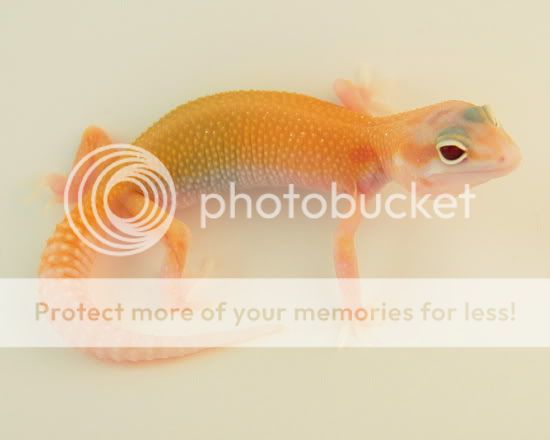
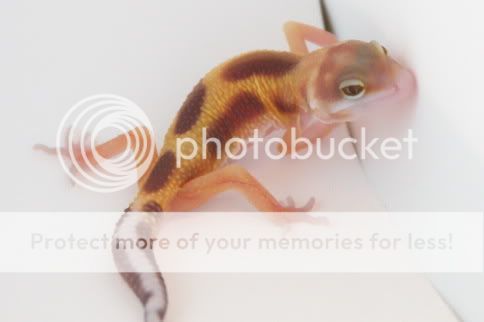
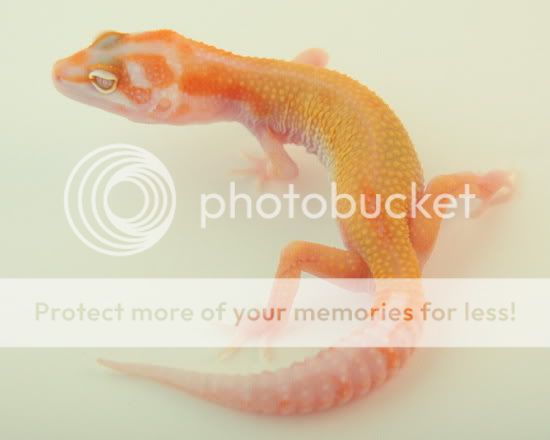
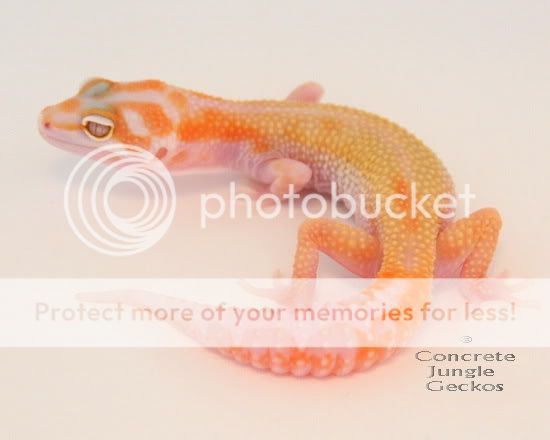
Does anyone have any full grown tremper albino giants who stayed light

Ccrashca069

New Member
Messages
3,179
Location
Lake Berryessa/Napa, Calif
RoyalCityReptiles said:
I don't think it is un-natural, or temporary... it is (IMO) showing the true colors... Seems like I share the same beliefs as someone who (unarguably) knows what he is talking about...

http://leopardgecko.com/colorfaq.html#a8

...but to each his own...

-Nate

Just my 2 cents worth. I do not believe in changing the temps during incubation to enhance coloring. I don't buy leopard geckos from anyone I find out that does do that practice. I believe in the natural coloring. And I agree that line-breeding does make some morphs nicer looking.
 

OhioGecko

Mod Squad Member
Messages
2,949
Location
Sterling Ohio
OK, here is another curve ball. How steady are the temps in their natural enviroment? Do they stay constant? If they don't are they unnatural?

On the other hand most people who have tried changing temps have noticed birth defects or a decrease in hatching rates. Does the benifits outway the consequences?

FYI - I have great respect for everyone in these forums that post informatively and positively. Please lets keep it that way. Sometimes we need to agree to disagree. I think this is a very interesting topic and debating promotes healthy thinking, but personal attacks are not needed.
 

Golden Gate Geckos

Mean Old Gecko Lady
Messages
12,730
Location
SF Bay Area
I REALLY don't like the way this thread is going. If this kind of bickering and sideways name-calling continues, I will simply close this thread and start issuing warnings!

For Robert, who started this thread by asking a perfectly legitimate question, I will give you MY input:

The very first Trempers were noted for their brown coloration. Ron Tremper experimented with the method the labs of Dr. David Crews used back in the early 80's when they were studying temperature sex determination in leopard geckos, and accidently stumbled upon a phenomenum where some morphs were brighter and had less dark pigmentation when incubated at higher temperatures. During these studies, is when it was determined that the gender of the geckos were temperature dependent and sex determination was assigned in the first 2-3 weeks of incubation.

Tremper began using the 'dual incubation method' to see if he could brighten up his albinos. It made a big difference! Contrary to what many believe, this incubations method IS NOT the "Tremper Method"... it is the Cruz/Gutzke (et al) method. Tremper also discovered that at a certain point in an albino gecko's development, it's color 'sets'. He found that keeping the albinos on a light/white substrate and bumping the temperatures up a few degrees prevented the geckos from 'browning out'.

A lot of time and work by other breeders has not only confirmed these theories, but by selective breeding, meaning holding back the BEST colored Tremper albinos and crossing them... the brown Tremper albino slowly started becoming a thing from the past. By line-breeding (selective breeding), the natural genetic tendency for many Tremper albinos to be brown is no longer an issue for the most part.

For Nate... You are NOT a highly experienced leopard gecko breeder! I have done a search for all your posts, and have found that your level of experience is limited simply by the nature of the questions you have asked and the level of comprehension in your posts and responses. That's OK, because we ALL started out on a steep learning curve, too!

My suggestion is to LOSE your argumentive and arrogant attitude, and make an effort to actually learn something from the standards of experience and knowledge the breeders you are arguing with have... instead of trying to prove your point (which IMHO you don't even have one).

For everyone else... let me pose a hypothetical question here. If a gecko's color was solely dependent on it's incubation temperature, wouldn't the males would be more bright and colorful than females by simple virtue of higher incubation temperatures? This is NOT the case!

Also, I have done experiments on coloration in a SHTCTB vs. substrate color and temperature. IT MAKES A DIFFERENCE. I'll post the photos if you like.

Finally, some of us breeders have been working with leopard geckos longer than some of the members here on GeckoForums.net have even been potty trained. Sometimes we all need to just shut-up and learn. Ask questions in a respectful manner, and you will find the answers much faster than you will by arguing.
 

dprince

Mod Squad Member
Messages
4,270
Location
California
OK, now that we're all playing nice............. :D I'm going to re-open this thread for some positive discussions on an interesting topic. Thank you VERY MUCH to all of those who kept cool heads and words - much appreciated. :D

OK, that being said.........my experience with Tremper line albinos is that they can INDEED be selectively bred to be genetically more colorful. Does temperature play a part? Absolutely!! Is it the ONLY part? Not in my experience. I have hatched several, IMHO, AMAZING APTOR's, RAPTOR's, etc. FEMALES that were incubated at 82 degrees. I have hatched some males that were - ho hum, as well as some that were amazing!! The same goes for the Tremper line of hybino (sunglow) that I worked with this year. Some of the most colorful ones have been female out of the 82 degree incubator. I've also had some amazing males, but it's been about equal. Interesting, eh? And this is just information from my experiences, to be taken for whatever it's worth. ;)
 

Halley

Senior Member
Messages
4,670
Location
Missouri
I have giants which appeared very light during the first year of age and I was told they will remain light but they have since browned. I was wondering if it is even possible for them to remain light past a year or two.

Well my guess is that it would be possible for them to change color somewhat. However I have never actually hatched a plain tremper albino. However I have two tremper giants, that where both born somewhere in 2005. I think both are very light and very beautiful animals. So yes, they can stay light over a few years of time.

Betty
TremperGiant015.jpg


Sandy
TremperGiant016.jpg
 
D

Don&SallysZoo

Guest
This is an interesting topic. Our first Tremper albino hatched dark and so far has stayed dark.

Male 7 months old Incubation temp 87
TremperAlbino.jpg


Our second one hatched lighter and so far staying light.

2.5 months old Incubation for female...temp 82

TrempAlbino5-14-08.jpg


Both of these temps where constant at the time of there incubation. I thought that the lower temps produced darker animals? Both of the parents look like the male...dark brown.
 

preacherman

Gecko Genetics
Messages
1,106
Location
Wisconsin
I think that this is a very interesting topic which deserves some more discussion.

The point that I was originally trying to make in this thread is that temperatures are not the only factor that has an influence over Tremper Albinos.

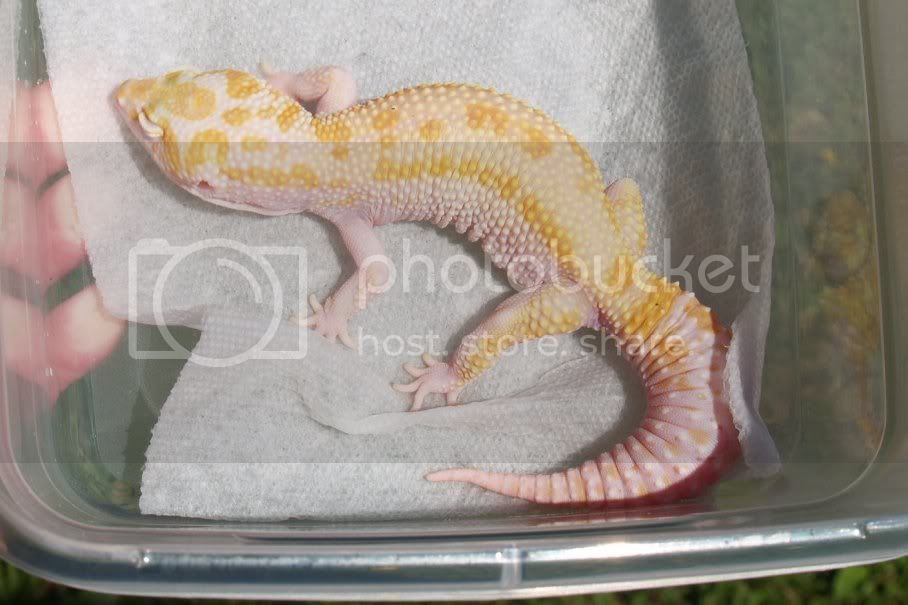
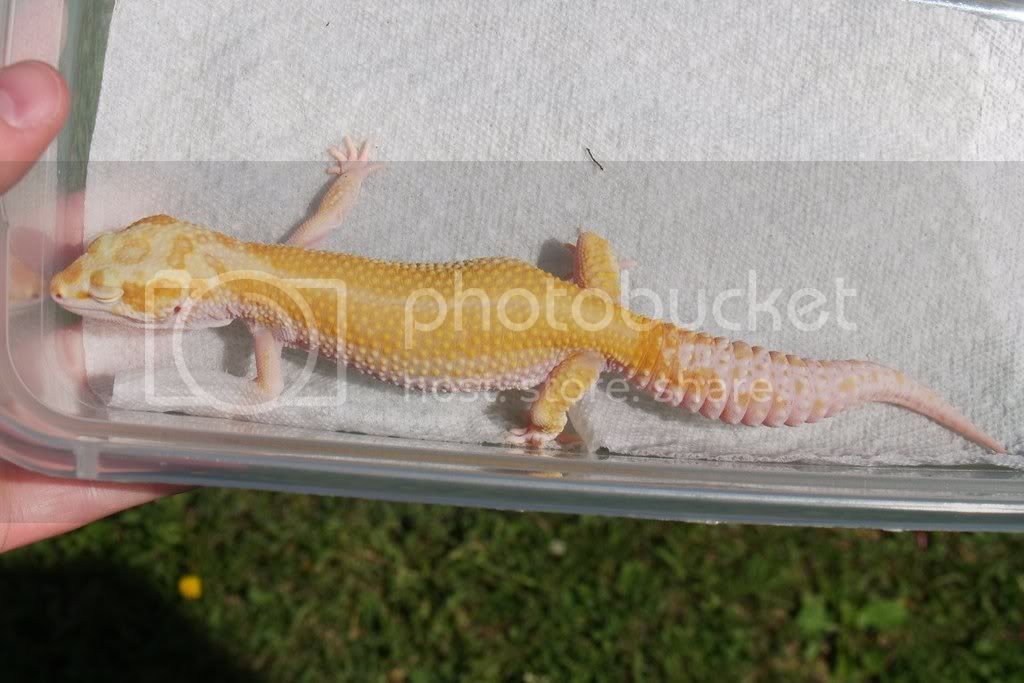
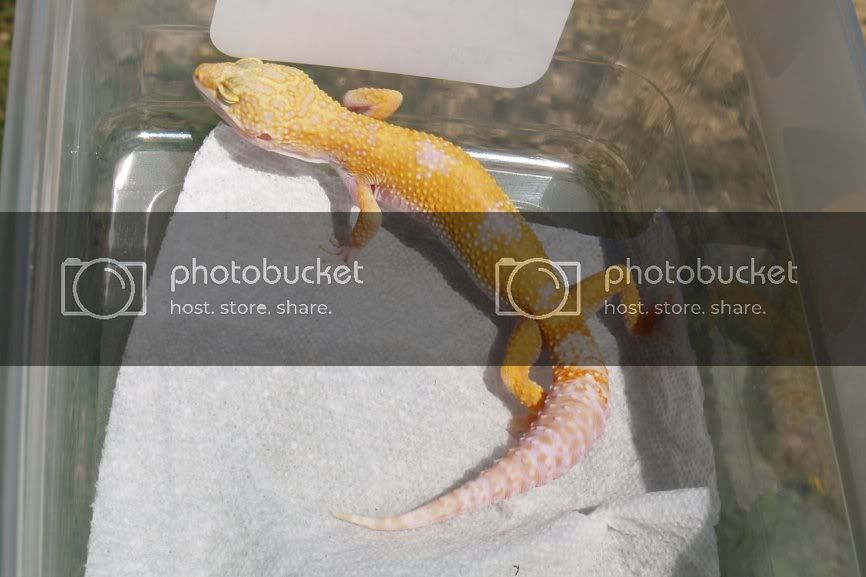
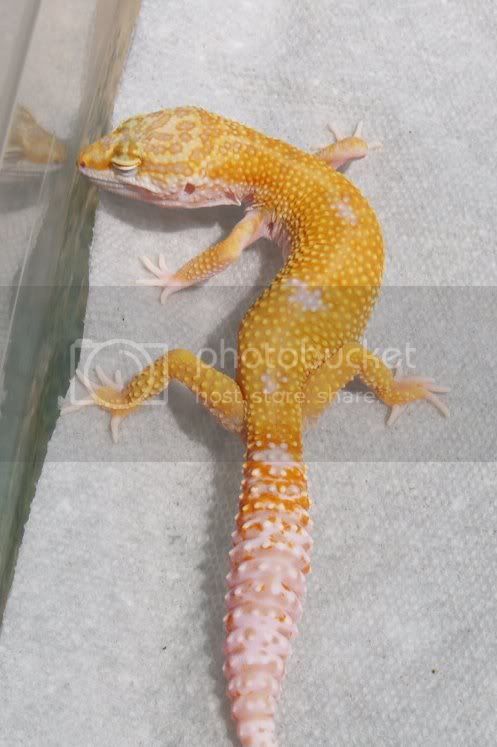
Below I have four different Tremper Albino females that we produced. The first two are R.A.P.T.O.R.s that hatched out in early 2006. They have been cooled and bred twice. The last two are Sunglows that hatched in early 2007. They have been cooled and bred once (and are still laying eggs). What is interesting (at least to me) about these four females is that they were all incubated at 81-83 degrees. On top of that, they all four reside on the bottom shelf of a rack that I have that has a very drastic heat gradient from top to bottom. The hot spot on the top shelf is 91 degrees. However, the hot spot on the bottom shelf where these four females are, is 83.7 degrees. They have been in this spot for over 7 months now. I normally wouldn't even think about keeping leos this cool, but it has had no effect on their health, their breeding, or their coloration.

What's my point? Simply this: I believe that selective breeding can result in Tremper albinos that are not as dramatically effected by temperatures as they have been in the past.

P1018221-1.jpg

P1018229-1.jpg


P1018238-1.jpg

P1018240-1.jpg
 

GroovyGeckos.com

"For the Gecko Eccentric"
Messages
2,004
Location
Chicago
Definitely. It has taken a long time, but the newer lines of Trempers seems to have less problems with this color change.

Anyone else notice that the higher temp albinos are more likely to change than the lower temp ones? I have. It is kind of weird.
 

Geckoreo

WB Geckos
Messages
202
Location
Glen Cove
Golden Gate Geckos said:
The very first Trempers were noted for their brown coloration. Ron Tremper experimented with the method the labs of Dr. David Crews used back in the early 80's when they were studying temperature sex determination in leopard geckos, and accidently stumbled upon a phenomenum where some morphs were brighter and had less dark pigmentation when incubated at higher temperatures. During these studies, is when it was determined that the gender of the geckos were temperature dependent and sex determination was assigned in the first 2-3 weeks of incubation.

Tremper began using the 'dual incubation method' to see if he could brighten up his albinos. It made a big difference! Contrary to what many believe, this incubations method IS NOT the "Tremper Method"... it is the Cruz/Gutzke (et al) method. Tremper also discovered that at a certain point in an albino gecko's development, it's color 'sets'. He found that keeping the albinos on a light/white substrate and bumping the temperatures up a few degrees prevented the geckos from 'browning out'.

A lot of time and work by other breeders has not only confirmed these theories, but by selective breeding, meaning holding back the BEST colored Tremper albinos and crossing them... the brown Tremper albino slowly started becoming a thing from the past. By line-breeding (selective breeding), the natural genetic tendency for many Tremper albinos to be brown is no longer an issue for the most part.

That was enlightening,
thanks for the info marcia
 

preacherman

Gecko Genetics
Messages
1,106
Location
Wisconsin
GroovyGeckos.com said:
Definitely. It has taken a long time, but the newer lines of Trempers seems to have less problems with this color change.

Anyone else notice that the higher temp albinos are more likely to change than the lower temp ones? I have. It is kind of weird.

Very intersting, Dan. Did they just gradually change over time, or was it triggered by something, i.e. temp changes or breeding?
 

malt_geckos

Don't Say It's Impossible
Messages
3,971
Location
Gainesville, Fl
I don't feel like reading the entire thread but my thoughts on this are: If you kept the gecko at a lower temperate say around 89...It will darken ALOT. We keep all of our albino babies and juvies in the top of the rack to ensure they stay lighter. We keep them at about 94 on the warm side.
 

GroovyGeckos.com

"For the Gecko Eccentric"
Messages
2,004
Location
Chicago
Jason, seemed to be temp changes. It does not get very warm in our place during the winter, and I had them in 20gal. tanks, being some of my first Leos. We keep our geckos in racks now, to save space, but I only had a couple at the time.

Needless to say, the hotspot was not enough to keep ambient temps up. So when it got cold outside the male changed drastically and the female only got a little darker. I have had a few babies since then do the same, but not very many. So the male being more sensitive to cooler temps and turning darker than the female, could have been a coincidence, I suppose.

Pretty much happened overnight though. Ouch!
 

Mel&Keith

Mod Squad Member
Messages
7,180
Location
Pasadena, TX
Here's a photo example of selective breeding vs. temperature manipulation.

All of these Tremper females were incubated at 82F at the same time. The first and second are from Jason Haygood's line and the third is from Ron Tremper's. The dookie's parents are both very pale so it just goes to show that you can't tell what the offspring will truly look like if you manipulate the incubation temperatures.

aptor3-1.jpg

Y050681_96.jpg


dookie.jpg


This is a male incubated at 88F from the same pairing as the first female pictured. We turned the temps on our racks down for a couple of weeks while we were on vacation and his color didn't change at all.
Before:
Aptor1.jpg

After:
Aptor_M-1.jpg
 

DanTheFireman

Active Member
Messages
1,510
Location
Lake Worth, FL
I came across an interesting point while going thru some older literature. In the March '97 Reptiles article by Tremper on "Designer Leopard Geckos" he states the following; "not only does a higher incubation temperature of 90 degrees produce all males, it also increases the amount of melanin (black pigment) that is laid down in the skin." - "To counteract this situation when producing male leopard geckos, we expose eggs to a peak temperature of between 90 and 92 degrees Farenheit for only 12 hours daily for the first 14 days of incubation to create male embryos, and then complete the remainder of incubation at 78 to 80 degrees to get the least amount of melanin. This method provides fantastic looking striped or high-yellow males (if the genetic traits are there to begin with)."
I realize that in the amelanistic albinos we're not dealing with melanin per se, but now this aging mush of Polish brain matter is further scrambled. One other thing, I've noticed for certain that a few of our darker RW albino females throw distinctively patterned offspring which are more brown than others.
 

godzillizard

New Member
Messages
639
Location
Minneapolis, MN
Once again, we are oversimplifying things!!! Just because something requires a little lateral thought to even partially understand does not mean it is as simple as we'd like to believe! If you want to work with genetics, whether it be leopard geckos or any other living, breathing creature; you must understand that you will be faced with many unanswerable questions--thats a big part of the "grand wonder" of working with creatures! There is no need to classify or box things into a neat, shiny, easy to comprehend package. We, as humans, are meaning machines--and we have an extreme propensity for over simplification for the sake of mental peace...but none of us have universal answers, because very few things are that simple. I think thats a big part of why I so envy the lizard brain...:D

Or maybe I just like to keep a little wonder in my world to keep things interesting...
 

Visit our friends

Top